












From Plasma to Laser: How Intelligent Remnant Reuse Powers Yongcheng's Processing Upgrade

“Now, just two operators can achieve the output that previously required eight people. Laser cutting is more efficient and offers better dimensional accuracy, which is hard to achieve with plasma.”

Yongcheng processes remnant materials using laser cutting.
Zhangjiagang Yongcheng Electrical Machinery Co., Ltd. specializes in processing remnant sheet metal. To overcome the limitations in efficiency and quality inherent in traditional plasma cutting, the company adopted BOCHU’s Intelligent Remnant Reuse solution. By integrating batch scanning remnant with laser cutting, Yongcheng has successfully enhanced the cutting quality of remnant materials while significantly reducing labor costs.
Plasma Cutting Could Not Meet Demands

Traditional plasma cutting required multiple operators and manual handling.
Prior to implementing the new solution, Yongcheng primarily relied on plasma equipment for remnant processing.However, this approach not only required a large number of operators but also presented limitations in processing quality.
“We originally had eight plasma machines, requiring about six operators,” stated the company’s responsible person. “If we used laser cutting, it generally only worked with full sheets, not remnant. That would drive up material costs, and efficiency might not even surpass plasma.”
For a company dedicated to remnant processing, using full sheets was not economically viable.
“If we processed with full sheets, the cost difference in materials would make our products completely uncompetitive in the market.”
Intelligent Remnant Reuse Makes Laser Cutting of Remnant Achievable

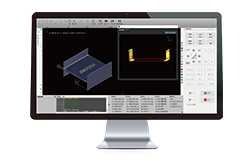
The system scans remnant profiles and generates optimized nesting results automatically.
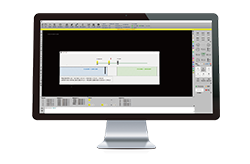
The introduction of BOCHU’s Intelligent Remnant Reuse changed this situation. The system automatically scans the profiles of remnant sheets and generates optimized nesting results, enabling laser processing of remnant.
“We would never have considered laser equipment if we haven’t found such a solution” the responsible person noted. By combining remnant scanning with laser cutting, Yongcheng maintains the cost advantage of using remnants while gaining the efficiency and quality benefits of laser processing.
Less Labor, Higher Efficiency
After deploying the new solution, production efficiency and staffing have changed markedly.
“Now, just two operators can achieve the output that previously required eight people.” Meanwhile, the processing quality delivered by laser cutting has improved significantly. “Laser cutting is more efficient and offers better dimensional accuracy, which is hard to achieve with plasma.”
Narrower kerf widths and less slag have also notably improved product appearance and reduced subsequent manual handling. “Products cut by laser have fewer burrs and cleaner edges.”
With Intelligent Remnant Reuse, Yongcheng has successfully automated its remnant processing upgrade. Previously scattered remnant sheets have been transformed into high-value production resources, allowing the company to reduce labor costs while substantially boosting production efficiency and product quality.


