Auto Nest Parameter Explanation
  • Software Download
  • Manual
  • Tutorial
  • CloudNest
Auto Nest Parameter Explanation

Function Explanation

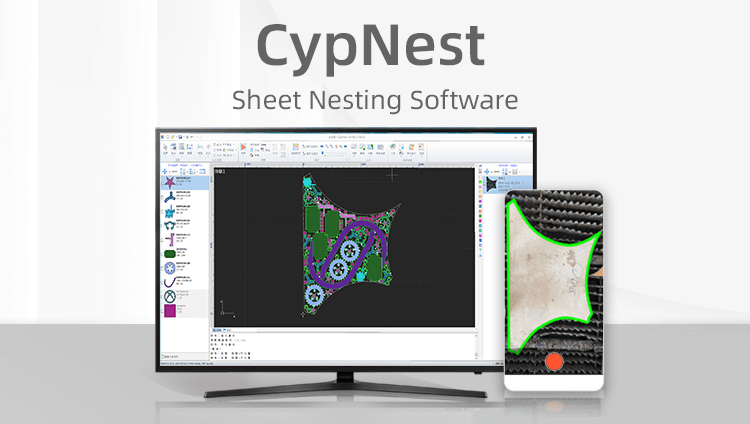
Auto Nest is the core function of CypNest, the parameters in Auto Nest will be explained one by one below.


Operation Methods and Precautions

1. Basic Parameters

(1) Select Parts: Choose to nest All parts in the list or selected parts.

(2) Select Plate:

    • Current: The operation only affects the currently selected plate and will not impact other already nested plates or the plates in the list.

    • Plate List: The operation affects all nested results and plates in list.

      • Plate list priority: Plates are used in sequence based on the order of the plate list below.

      • Recommendation: Intelligently calculate the optimal result and select the plate with the best nesting result from the plate list for use.

    • Advanced mode: Includes Coiling mode and Auto select plate.

2. Plate List

    • Displays all current plates, including information such as size, available quantity, and total quantity. The priority of plates can be adjusted (Auto nest will first place parts into plates with higher priority).

3. Nest Parameters

    • Nest direction: CypNest will arrange parts according to the selected direction.


    • Rotate: During the nesting process, the angle by which a part is rotated is an integer multiple of this parameter.

    • Strategy: When prioritizing speed, the number of calculations is reduced to improve calculation efficiency, which is suitable for regular sheet metal parts; when prioritizing utilization rate, multiple calculations are performed to obtain the optimal solution, which is suitable for parts with relatively complex shapes.

    • Nest time: If the nesting time is relatively long, the nest time can be set to impose a constraint, and the optimization will automatically stop when the set time is reached.

4. Co-Edge

(1) After checking the Co-Edge, auto nest will perform co-edge on the parts where co-edge is possible, according to the parameter settings.


(2) Min Co-Edge length: Only the edges of parts longer than this value can be used as co-edge (Note: the Min co-edge length takes effect only  when "Check part gap" is checked).


(3) Co-edge mode:

    • All: Regardless of other conditions, as long as the length of two edges is greater than the Min co-edge length, CypNest will perform co-edge on these two edges.

    • Partial: The number of parts with co-edge cannot exceed the Max co-edge Qty.

(4) Only to same parts: Only edges of the same length on the same kind of parts can be used as co-edge.

(5) Check part gap: When checked, the parts without co-edge will be detected and be nested with a certain gap; when not checked, parts without co-edge will be nested with 0 part gap.


(6) Max Co-edge Qty: It decides the maximum number of parts that can share a co-edge during auto nest. For example, if set to 2, at most two parts can share a co-edge.


5. Clear nest results first, do not revert extra parts

    • If not checked, nest will continue based on the original nesting results.
    • If checked, the previous nesting results will be cleared first before new nesting is performed.
Note: When the number of parts used exceeds the planned, checking this option will not remove the excess parts.


Auto Nest Parameter Explanation 448view

Function Explanation

Auto Nest is the core function of CypNest, the parameters in Auto Nest will be explained one by one below.


Operation Methods and Precautions

1. Basic Parameters

(1) Select Parts: Choose to nest All parts in the list or selected parts.

(2) Select Plate:

    • Current: The operation only affects the currently selected plate and will not impact other already nested plates or the plates in the list.

    • Plate List: The operation affects all nested results and plates in list.

      • Plate list priority: Plates are used in sequence based on the order of the plate list below.

      • Recommendation: Intelligently calculate the optimal result and select the plate with the best nesting result from the plate list for use.

    • Advanced mode: Includes Coiling mode and Auto select plate.

2. Plate List

    • Displays all current plates, including information such as size, available quantity, and total quantity. The priority of plates can be adjusted (Auto nest will first place parts into plates with higher priority).

3. Nest Parameters

    • Nest direction: CypNest will arrange parts according to the selected direction.


    • Rotate: During the nesting process, the angle by which a part is rotated is an integer multiple of this parameter.

    • Strategy: When prioritizing speed, the number of calculations is reduced to improve calculation efficiency, which is suitable for regular sheet metal parts; when prioritizing utilization rate, multiple calculations are performed to obtain the optimal solution, which is suitable for parts with relatively complex shapes.

    • Nest time: If the nesting time is relatively long, the nest time can be set to impose a constraint, and the optimization will automatically stop when the set time is reached.

4. Co-Edge

(1) After checking the Co-Edge, auto nest will perform co-edge on the parts where co-edge is possible, according to the parameter settings.


(2) Min Co-Edge length: Only the edges of parts longer than this value can be used as co-edge (Note: the Min co-edge length takes effect only  when "Check part gap" is checked).


(3) Co-edge mode:

    • All: Regardless of other conditions, as long as the length of two edges is greater than the Min co-edge length, CypNest will perform co-edge on these two edges.

    • Partial: The number of parts with co-edge cannot exceed the Max co-edge Qty.

(4) Only to same parts: Only edges of the same length on the same kind of parts can be used as co-edge.

(5) Check part gap: When checked, the parts without co-edge will be detected and be nested with a certain gap; when not checked, parts without co-edge will be nested with 0 part gap.


(6) Max Co-edge Qty: It decides the maximum number of parts that can share a co-edge during auto nest. For example, if set to 2, at most two parts can share a co-edge.


5. Clear nest results first, do not revert extra parts

    • If not checked, nest will continue based on the original nesting results.
    • If checked, the previous nesting results will be cleared first before new nesting is performed.
Note: When the number of parts used exceeds the planned, checking this option will not remove the excess parts.