












Enhancing Robot Welding Coverage, Reducing Manual Dependence: Dongri Steel Structure's Intelligent Welding Practice

“In our industry, the processing fees are already quite low; it’s no longer just about price competition, but also quality and service competition”
In the highly competitive steel structure industry, companies not only have to reduce costs but also continuously improve quality and delivery capabilities. Following an extensive two-to-three-year investigation, Shanxi Dongri Steel Structure Engineering Co., Ltd. introduced intelligent welding robot systems, achieving over 80% welding coverage and reducing manual dependence, thereby enhancing production stability.

Dongri Steel Structure’s manufacturing facility in Shanxi, supporting large-scale steel structure production.
Industry Challenges: Cost, Quality, and Competition
"In our industry, the processing fees are already quite low; it’s no longer just about price competition, but also quality and service competition," noted Mr. Wu. "Every manufacturer is exploring ways to cut costs." In this context, the critical question becomes how to enhance efficiency without sacrificing quality.
Prudent and Practical Equipment Evaluation
Before the equipment introduction, Mr. Wu spent two to three years conducting examinations. "I must personally operate any equipment before purchasing it; without hands-on experience, I won't make a purchase decision." Only after ensuring that all key indicators met their requirements did they finalize their decision. "In practice, it has performed even better than my expectations."
Key Decision Factors
- Robot Welding Coverage Rate
"The most crucial aspect is its actual welding capability," emphasizes Mr. Wu. "If a system can only weld 10 out of 100 welds, it's clearly not viable." Currently, the system achieves an average welding coverage rate of approximately 80%, with some components, such as crane beams, exceeding 95%.

Intelligent welding robots in operation, achieving high welding coverage across complex structures.
- Labor Dependency
Another crucial consideration is the need for human operators. "If we still have to hire highly paid individuals to operate it, the change doesn't make sense." The aim is to rely on the equipment rather than people.
- Economic Feasibility
The ultimate decision hinges on economic viability. As long as the equipment can weld stably and reduce labor dependence, the investment is justified.
From Initial Use to Optimization: Towards Stability and Growth
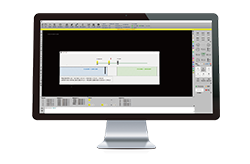
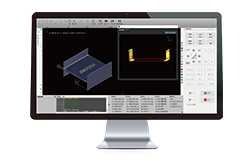
Initially, Dongri adopted a production method where parameters were pre-set. With increasing system experience, they gradually optimized their workflow for enhanced efficiency, enabling synchronized processing. Simultaneously, emphasis was placed on ease of operation. "We shouldn't rely too heavily on operators' learning curves; the system must be simple and user-friendly."

Operators can quickly learn and manage the system with minimal training.
For Dongri Steel Structure, integrating intelligent welding was a careful yet forward-thinking choice. "With stable quality, we can better serve our clients, building trust and generating more orders. This ultimately fosters a virtuous cycle of growth."


